

Tooling & Injection Molding ↗
Plan the plastic parts, tooling and molding requirements for the product.
Read toolroom and equipment references, mold-trial preparation and the documented first-article and production checks.
LEANODM.com / MANUFACTURING
Review the manufacturing route for your plastic and electronic product.
LEANODM.com presents Xinyinhai’s product development and manufacturing capabilities for plastic and electronic products. Explore the documented processes relevant to your product. The route, responsibilities and quality requirements are agreed for the project.
Plan the plastic parts, tooling and molding requirements for the product.
Read toolroom and equipment references, mold-trial preparation and the documented first-article and production checks.
Review board assembly, automatic printing, inspection gates and the connection to product integration.
Explore archived single-sided and double-sided workshop routes, inspection gates, maintenance planning and training topics.
Protect production firmware through controlled installation, key management, chip read protection and authorized quantity control.
Agree the protection configuration for the project’s chip, toolchain and product architecture, then control approved versions, programming access and quantity reconciliation.
Coordinate the printed appearance with the product and its manufacturing requirements.
Examine work-instruction photographs of fixture positioning, separate printing layers and comparison with the required appearance.
Connect parts and boards to the documented assembly, inspection and packaging route.
Review fastening and hand-soldering references, assembly checks, foreign-object prevention and the packing route.
Three shop-floor changes documented in Xinyinhai’s 2018–2026 process improvement report.
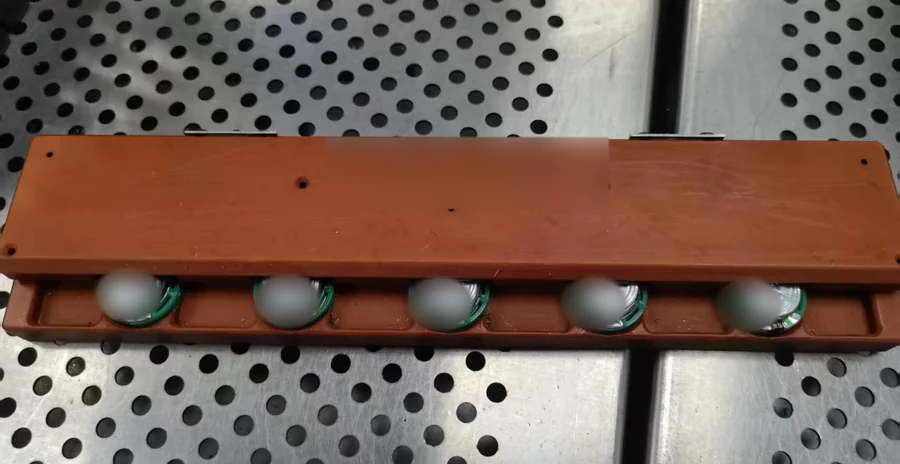
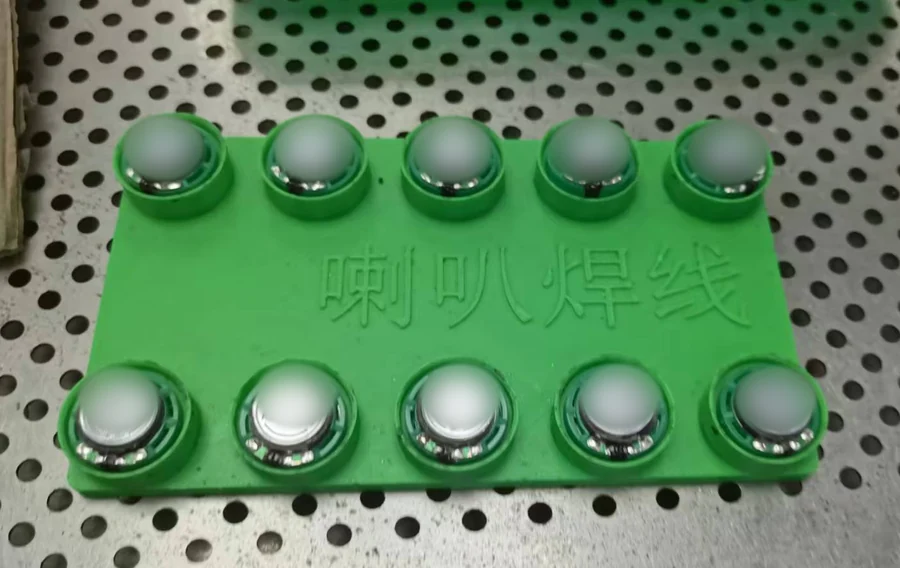
Operators previously placed speakers one at a time. The magnetic fixture holds 10 speakers at once.
Xinyinhai’s June 2026 case record reports a 4.7% increase in soldering workshop efficiency.
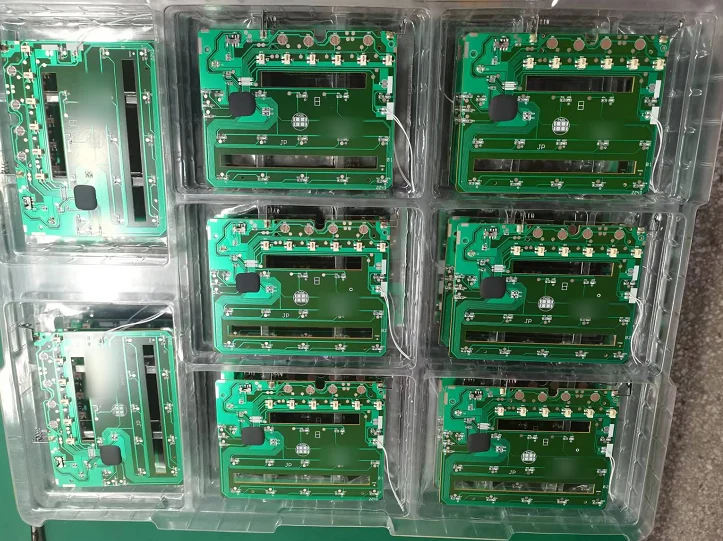
The team made vacuum-formed trays with pockets shaped to the parts.
The trays protect circuit board assemblies and fragile parts during transfer.
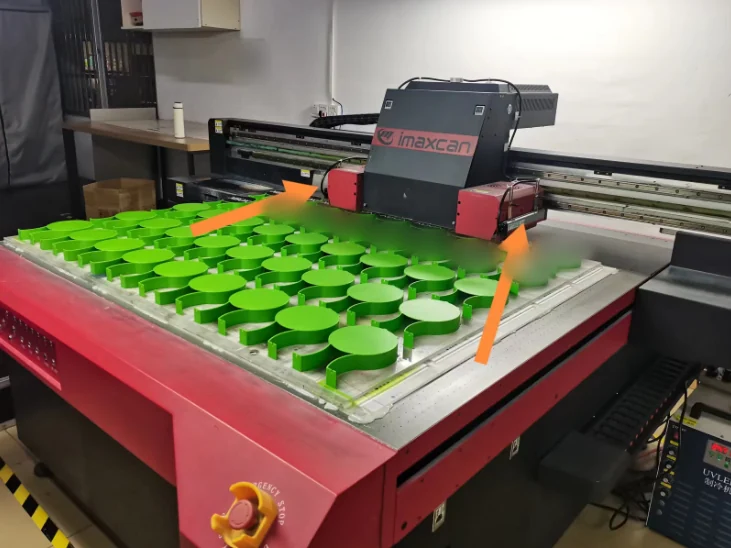
Dust clinging to plastic parts left visible specks. The team added an anti-static bar to the UV printer.
The report records fewer dust specks on the printed parts.
Xinyinhai’s new-employee training for its Dongguan facility documents how production teams are taught to organize materials and workstations.
Xinyinhai’s June 2019 supplier-conference presentation reviewed management experience, staff retention after a facility move, and early automation adoption. Its 5S assessment examined floor dirt and debris alongside operator practices and equipment condition. The presentation reported improved employee stability through April 2019.
One employee proposal gave cutting tools fixed holders at the machines and used elastic tethers to make the tools easier to take and return. The presentation also showed defect display boards, marked tool locations, organized reference files, video training, and mold maintenance.
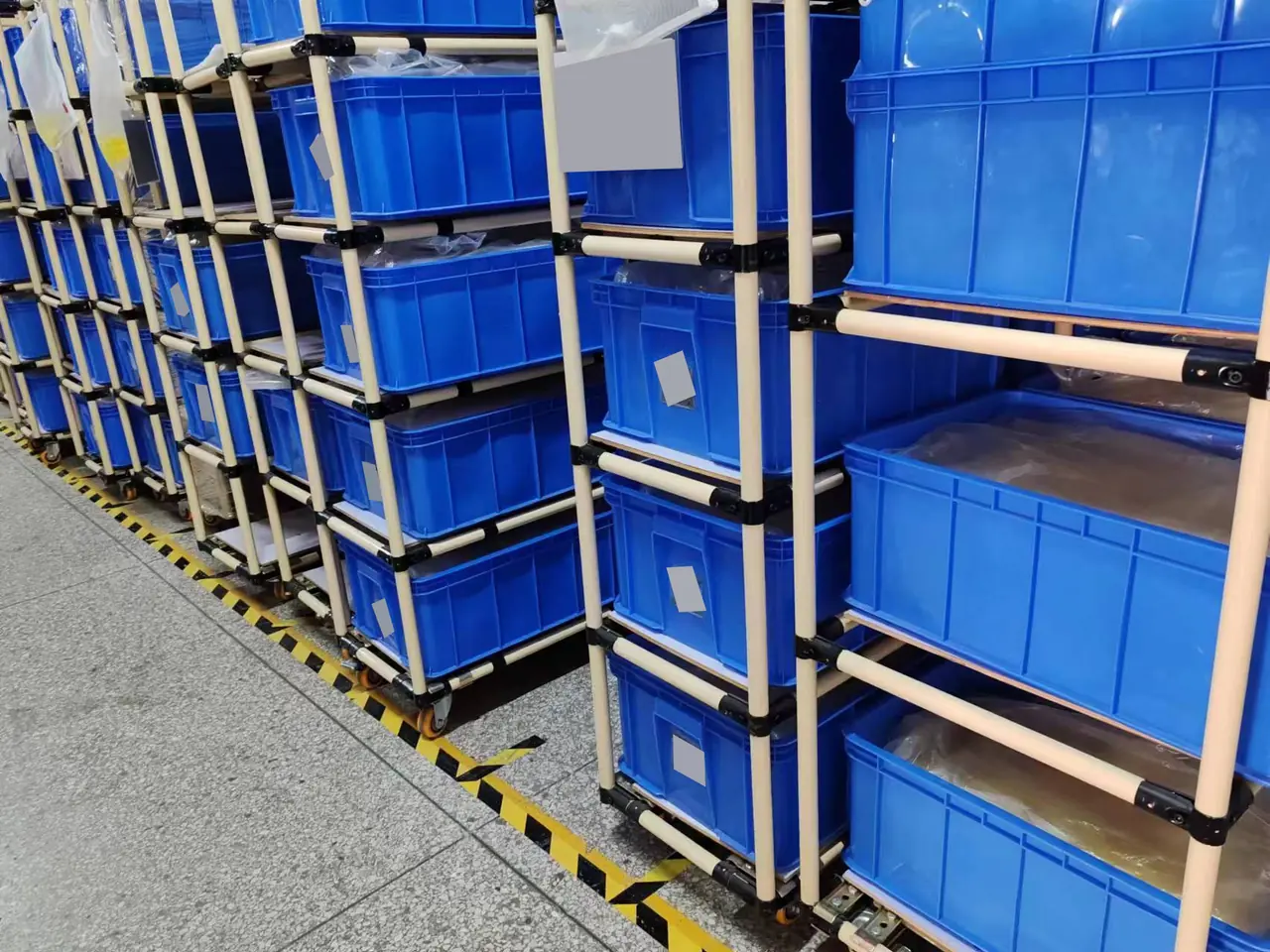
Xinyinhai’s assembly and plastics workshops documented changes to how they stored supplies and staged material bins.
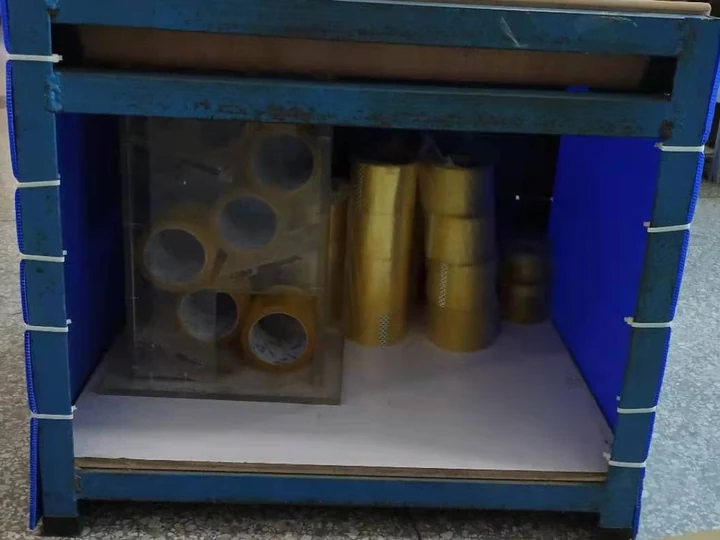
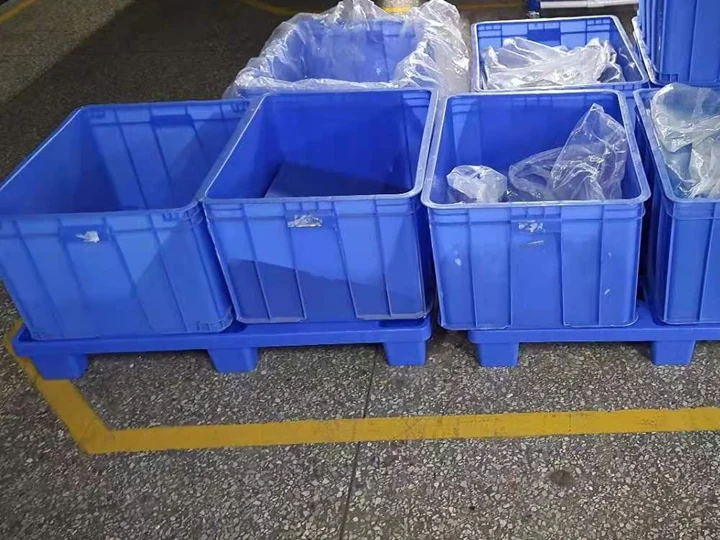
Xinyinhai’s 2022 5S records called for inspections at varying times every two weeks, with results reviewed every two months. Inspectors checked for tool sign-out tags at the molding tool board and looked for machine maintenance sheets and clear fixture IDs in screen printing.
The process pages connect archived work instructions, training references, equipment records and factory photographs to the decisions involved in a new project. Source captions distinguish original records from explanatory diagrams.
See Team & Equipment for the equipment supporting molding, decoration, electronics, assembly and packaging.
An equipment inventory is a documented baseline. A maintenance plan records scheduled work. A training example explains a topic. Current availability, completed maintenance, product acceptance and applicable certification require their own review; these references do not establish those results.
Agree the product revision, materials, reference samples, inspections and tests for the proposed route. Review material identification and record links when planning how production and inspection evidence should connect.
For a concept or new design, review New Product Development. For an electronics project, prepare the available board and function information in the Electronics & SMT project brief.
Share the intended use, design status, essential functions, target market and quantity or timing expectations if known. Begin with a non-sensitive overview. Review IP & Confidentiality and agree the exchange before sharing restricted drawings, firmware or keys.